
ClearCue™ Knowledge Base
Understanding timing, structure, and workflow
ClearCue™ is not a plugin, not automation, and not a preset system.
This knowledge base explains how it behaves, why it behaves that way, and how to use it intentionally in real editorial workflows.
What ClearCue™ Is - and Is Not
What it is
- • A frame-accurate timing reference
- • A non-destructive pacing layer
- • A visual + audible rhythm grid
- • A tool for shaping timing intentionally
What it is not
- • Not AI
- • Not automation
- • Not beat detection
- • Not a music replacement
- • Not a plugin or install
ClearCue™ never decides where to cut.
It only makes time visible.
How ClearCue™ Works (Conceptual Overview)
Each ClearCue™ file contains one thing only:
Timing.
Internally, this consists of:
- • A mathematically precise rhythmic grid
- • Frame-locked pulse points
- • A lightweight audio click for reference
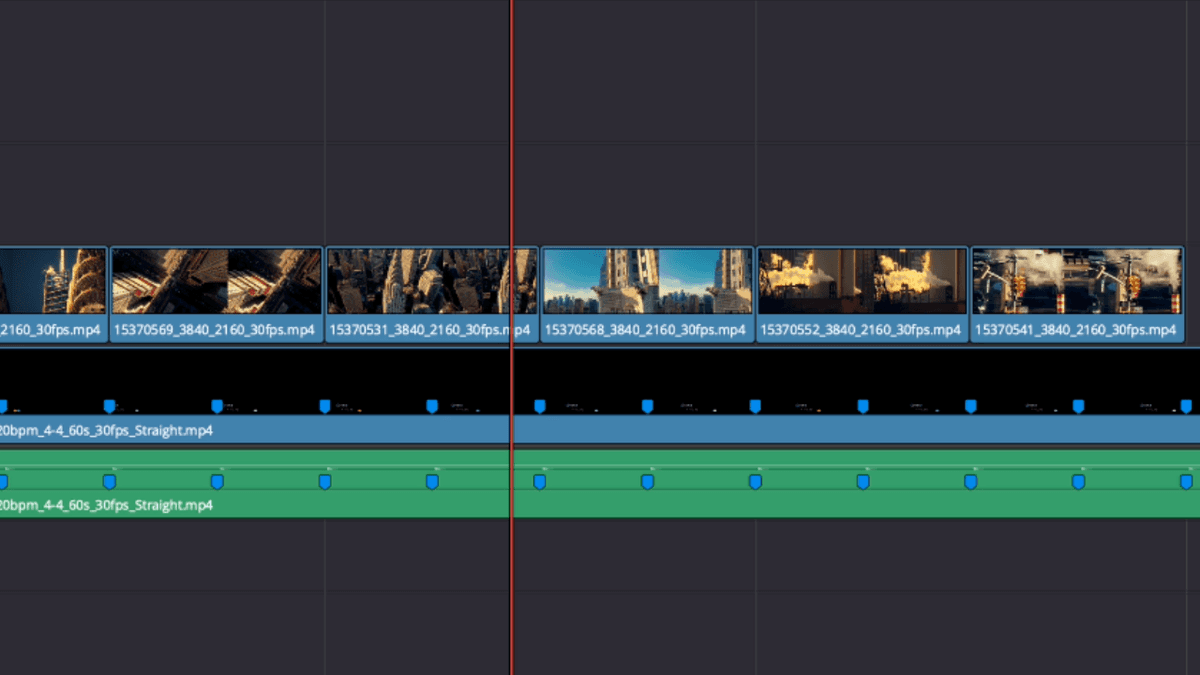
- • (In Resolve) visible timing pulses as timeline events
There is:
- • No metadata dependency
- • No external markers
- • No session state
- • No lock-in
You can delete it at any moment.
Nothing collapses.
ClearCue™ and Your NLE
DaVinci Resolve (Recommended)
Resolve is the native environment for ClearCue™.
You will see:
- • Visible timing pulses
- • Frame-accurate snapping
- • Layered cue behaviour
- • DAW-style stacking and alignment
Resolve displays the full timing system.

Adobe Premiere Pro
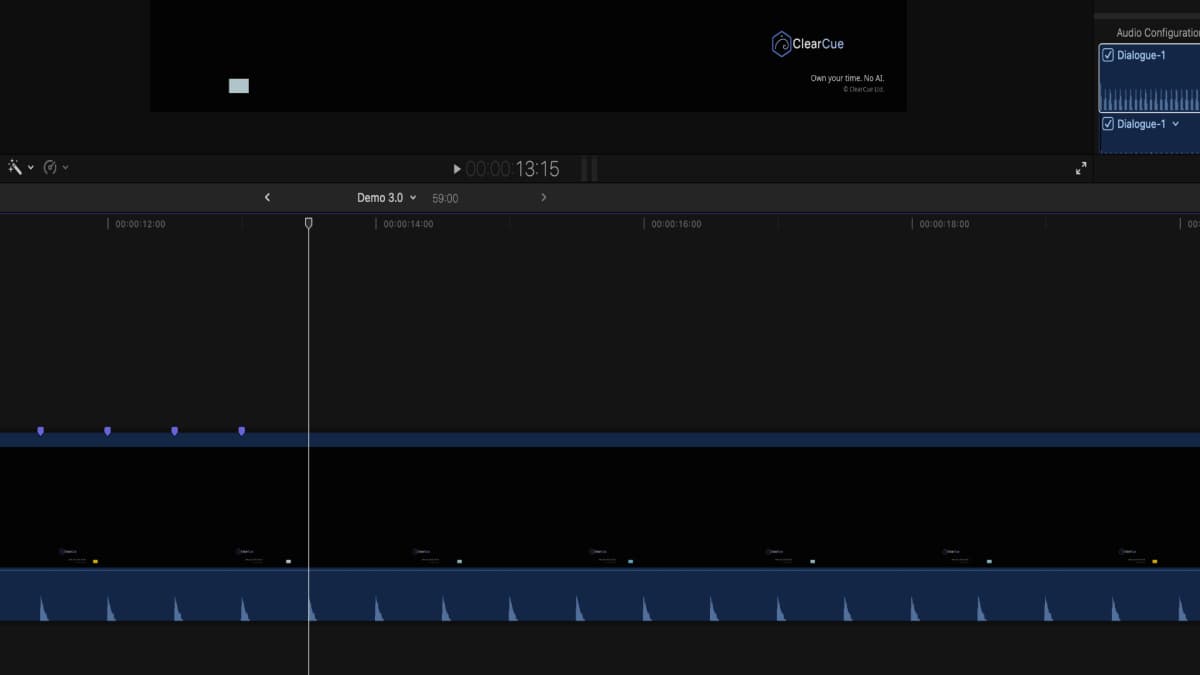
Premiere reads ClearCue™ as a media clip.
You will get:
- • Audible timing click
- • Visual pulse inside the clip
- • Clean alignment
- • No imported timeline markers
Timing behaviour remains accurate.

Final Cut Pro
FCP behaves similarly to Premiere:
You will get:
- • Audible timing click
- • Visual pulse inside the clip
- • Clean alignment
- • No imported timeline markers
Timing behaviour remains accurate.

ClearCue™ and Your NLE
Marker placement in Final Cut Pro and Premiere Pro
Some NLEs do not import timeline markers from media clips.
This is expected.
In Final Cut Pro and Premiere Pro:
- • The timing pulses are visible and audible inside the clip
- • You can place markers manually if you wish
- • Once placed, those markers are reusable across sequences
This is no different from building or refining a template.
ClearCue™ simply gives you accurate placement information.
ClearCue™ Modes (Timing Behaviours)
ClearCue™ modes define how time is spaced, not what content does.
Examples:
- • Straight / Grid – even, unmodified structure
- • Organic – fibonacci spacing
- • Drift – consistently delayed timing
- • Offset – displaced emphasis
- • Tension – compressed timing that reduces spacing
- • Interplay / Mosaic – complex rhythmic behaviour
- • Push – urgency
Each mode:
- • Is deterministic
- • Is repeatable
- • Never recalculates unless you choose a different mode
You can stack them freely.
Stacking and Layering Cues
ClearCue™ supports multiple timing layers at once.
You can:
- • Stack cues vertically
- • Run different rhythmic systems simultaneously
- • Use one for structure, another for feel
- • Remove or replace layers without breaking anything
This is overlay, not sequence.
Structure runs alongside instinct, not instead of it.
Working with Music (Important)
ClearCue™ grids are mathematically perfect.
Most music is not.
This is expected.
Common causes of perceived drift:
- • Micro-timing shifts
- • Swing and groove
- • Compression/transient shaping
- • Human performance
- • Tempo fluctuations
ClearCue™ does not drift.
If something feels off:
- • Choose a grid closer to the music's internal feel
- • Adjust playback speed slightly
- • Or use ClearCue™ as a structural reference, not a lock
Rule of thumb:
Shape timing with intention.
Don't chase imperfect audio.
Working with Music (important)
ClearCue™ does not attempt to match music automatically.
Instead, you choose a timing grid first, based on the pacing needs of the story, the edit, and the intended rhythm of the piece — before committing to a soundtrack.
Music is then chosen or tested against that pacing decision, not the other way around.
To work effectively, it helps to understand tempo and time signature.
Most professional music libraries provide this information clearly.
In practice:
- • 120 BPM / 4–4 works as a neutral structural base for a wide range of edits
- • Slower grids often suit dialogue-led or narrative pacing
- • Faster grids can introduce tension or urgency, even when paired with slower music
This is an editorial judgment, not a technical constraint.
ClearCue™ makes pacing visible so you can evaluate whether the structure supports the story – before emotional content is layered on top.
Changing Music Late in the Edit
ClearCue™ is audio-independent.
If you replace music:
- • Your pacing remains intact
- • Cuts stay clean
- • Structure holds
This is especially useful for:
- • Trailers
- • Brand films
- • Social edits
- • Client revisions
ClearCue™ lets you separate timing decisions from soundtrack decisions.
Frame Rates and Technical Notes
ClearCue™ always aligns to real frame boundaries.
Supported frame rates include:
- • 23.98
- • 24
- • 25
- • 29.97
- • 30
- • 50
- • 59.94
- • 60
Grids do not interpolate.
They snap cleanly.
Timing is stable across sessions and exports.
Intended Use
ClearCue™ is built for editors who want:
- - Clear timing decisions
- - Repeatable pacing
- - Layered structure
- - Editor-agnostic workflows
- - A calm, non-automated process
It works best when treated as:
An advanced ruler, not a prescription.
ClearCue™ rewards editors who think structurally.
It does not replace taste.
Built independently. No AI tricks. No bloat. Just clarity.
Questions?
Have a question not covered here - reach out.