
Timing System
Design Structure First.
The Precision Timing Instrument helps creators design, test, and communicate pacing before committing to music, media, or final edits.
What It Does
Make Timing Visible
Generate frame-aware timing structures that can be seen and worked with directly in the timeline.
Test Before Committing
Experiment with pacing before selecting music, locking edits, or building complex sequences.
Work With The Medium
Frame rates, tempo, and timing have real constraints. The Timing Instrument helps make those constraints visible.
Precision Timing Instrument
A short walkthrough covering timing modes, frame rates, diagnostics, variation and cue generation.
How It Works
1
Choose A Structure
Select a timing mode and define the behaviour of the pattern..
2
Define Timing
Set frame rate, tempo, density, and variation.
3
Generate A Cue
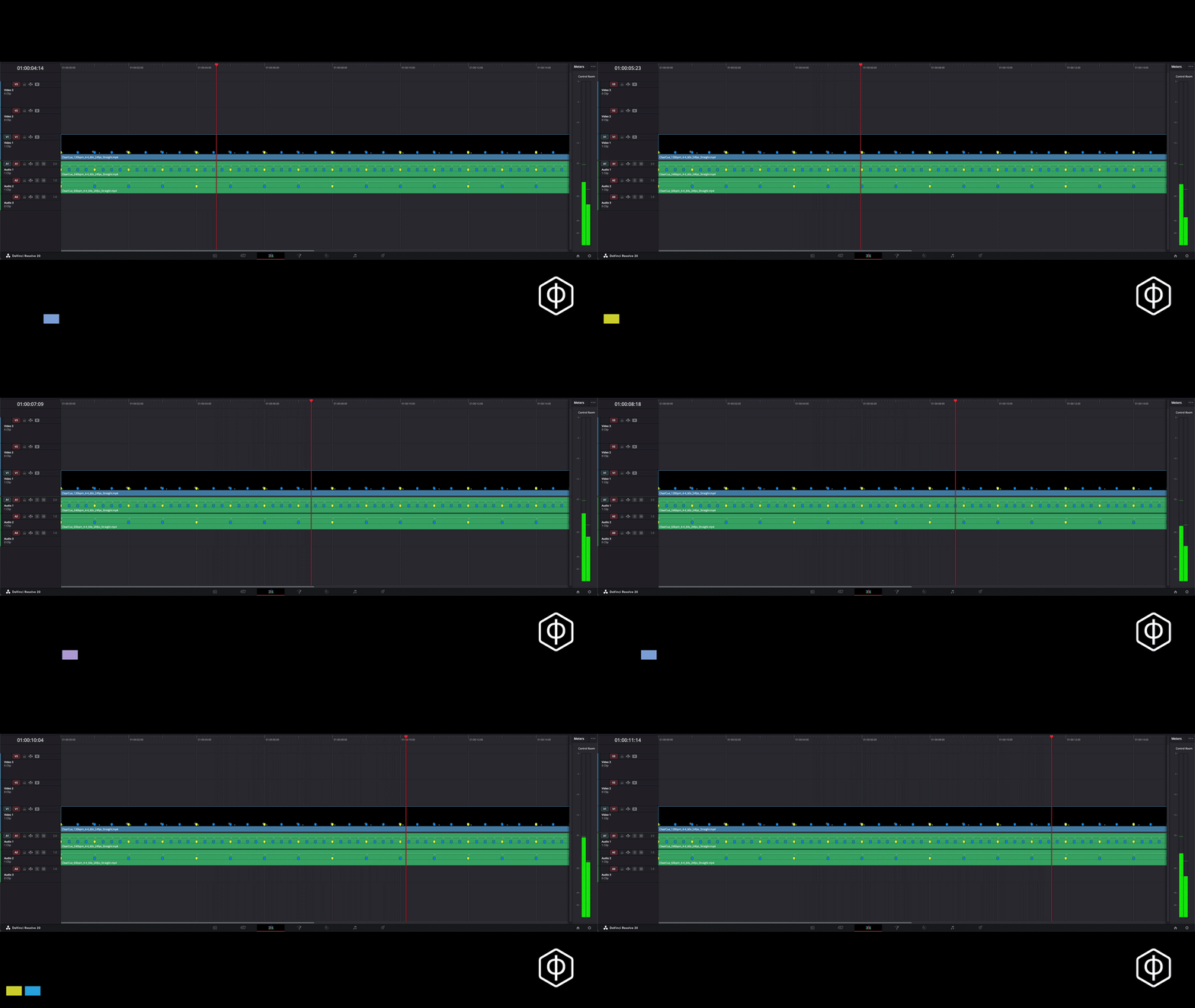
Export a frame-aware timing guide as an MP4 ready for use in your timeline.
Core Concepts
FRAME AWARENESS
Tempos behave differently at different frame rates. ClearCue analyses these relationships and, where possible, suggests frame-accurate configurations.
STRUCTURE BEFORE MUSIC
Design pacing first. Add music later.
The structure remains intact regardless of soundtrack changes.
PACING AS A DESIGN TOOL
Fast. Slow. Dense. Sparse.
Pacing can be explored intentionally rather than discovered by accident.
Current Features
Timing Modes
Straight, Offset, Tension, Mosaic, Interplay, Push, Drift, Organic.
Frame Rates
24, 23.97, 25, 29.97, 30, 48, 50, 59.94, 60, 120.
Diagnostics
Frame-accuracy analysis and timing guidance.
Variation
Natural timing variation controls.
Direction
Modes can be set forward or backwards.
Export
Frame-aware MP4 timing guides.
Ready to build your own timing structures?
Example Applications
Editing
Build sequences against visible timing structures.
Planning
Prototype edit structures before committing assets.
Motion Design
Align animation and transitions to intentional pacing.
Co-ordination
Align teams to predefined timing structures.
Music-Driven Content
Explore rhythm independently from the source track.
Temporal Branding
Create bespoke timing structures that can be used across content maps
Philosophy
Structure Is Easier To Work With When It Is Visible
The Timing Instrument began with a simple question:
Why can audio producers see timing, while editors are expected to feel it?
Music production is built around visible structures such as tempo, rhythm and meter. Editing relies on many of the same principles, but they are rarely represented directly in the timeline.
The Timing Instrument applies audio thinking to video, making timing visible so pacing becomes easier to explore, communicate and refine.
Get Access
One-time purchase. Includes all current timing modes and future updates within the current version.
Who It’s For
Editors
Design pacing before editing.
Content Creators
Create repeatable timing systems.
Motion Designers
Coordinate animation with timing.
Teams
Work from shared pacing references.
Producers
Explore tempo and timing.
Educators
Explore temporal structures.
Timing Notes
FAQ
-
You receive access to the ClearCue timing engine, a browser-based tool that generates frame-accurate timing guides for editing. You can create your own timing patterns, tempos, structures, and variations, then export them as video timing guides for use directly inside your editor.
-
A ClearCue is a timing guide you drop directly into your timeline. It contains visible timing markers and an optional audio click so you can cut against structure instead of guessing pacing manually.
-
Choose a timing pattern, set tempo and time signature, then generate your timing guide. Import the exported file into your timeline like normal media and edit directly against the markers.
-
ClearCue works best in DaVinci Resolve but can be used in any editor that supports standard video files, including:
Premiere Pro
Final Cut Pro
CapCut
Vegas
Avid
Resolve
-
No. ClearCues are standard MP4 media files.
There is:
no plugin installation
no compatibility setup
no rendering extension
no background process
You simply drag them into your timeline.
-
No.
ClearCue is designed to help structure pacing independently from music. You can:
edit silently
design pacing first
add music later
swap music without rebuilding the edit
-
Yes. Many editors use ClearCue alongside music to:
tighten pacing
align cuts more consistently
reduce waveform hunting
revise edits faster
-
Beat detection attempts to infer structure from audio transients.
ClearCue generates structure directly.
This gives you:
stable timing
consistent pacing
editable timing systems
frame-accurate visual references
without relying on waveform interpretation.
-
Yes.
The engine allows you to design custom timing structures using:
tempo
density
variation
pattern modes
directional timing systems
You can generate both simple and experimental pacing structures.
-
Yes.
Many editors stack multiple timing guides to:
test pacing options
compare structures
layer movement systems
build more complex edits
-
Yes.
Because ClearCues are media files, they can be:
cut
trimmed
duplicated
stacked
saved
reused
like any other clip in your timeline.
-
The engine supports common editing frame rates including:
24
25
30
48
50
60
120
Additional frame rate support may expand over time.
-
Yes.
Engine updates are included with purchase.
-
No.
The ClearCue Engine is a one-time purchase.
-
No.
ClearCue is a deterministic timing system designed for direct creator control. Nothing is automated, generated, or edited using AI.
-
Most editors hold pacing mentally while editing.
ClearCue externalises timing into a visible structure directly inside the timeline. This reduces cognitive load and makes pacing easier to manage over long edits.
-
ClearCue is designed for:
video editors
filmmakers
music editors
trailer editors
short-form creators
motion designers
hybrid audio/video creators
especially those who work rhythmically or care deeply about pacing.
-
Video files are:
portable
editable
cross-platform
timeline-native
This avoids plugin compatibility problems and allows ClearCue to work across multiple editing systems.
-
ClearCues are 15s
As the Cues are video files, you can copy and paste them easily to create any duration you want.
Its designed to be like Lego.
-
Yes.
You can use ClearCue in commercial editing work and client projects.